Read. Reading. To Be Read.
September has always belonged to books.
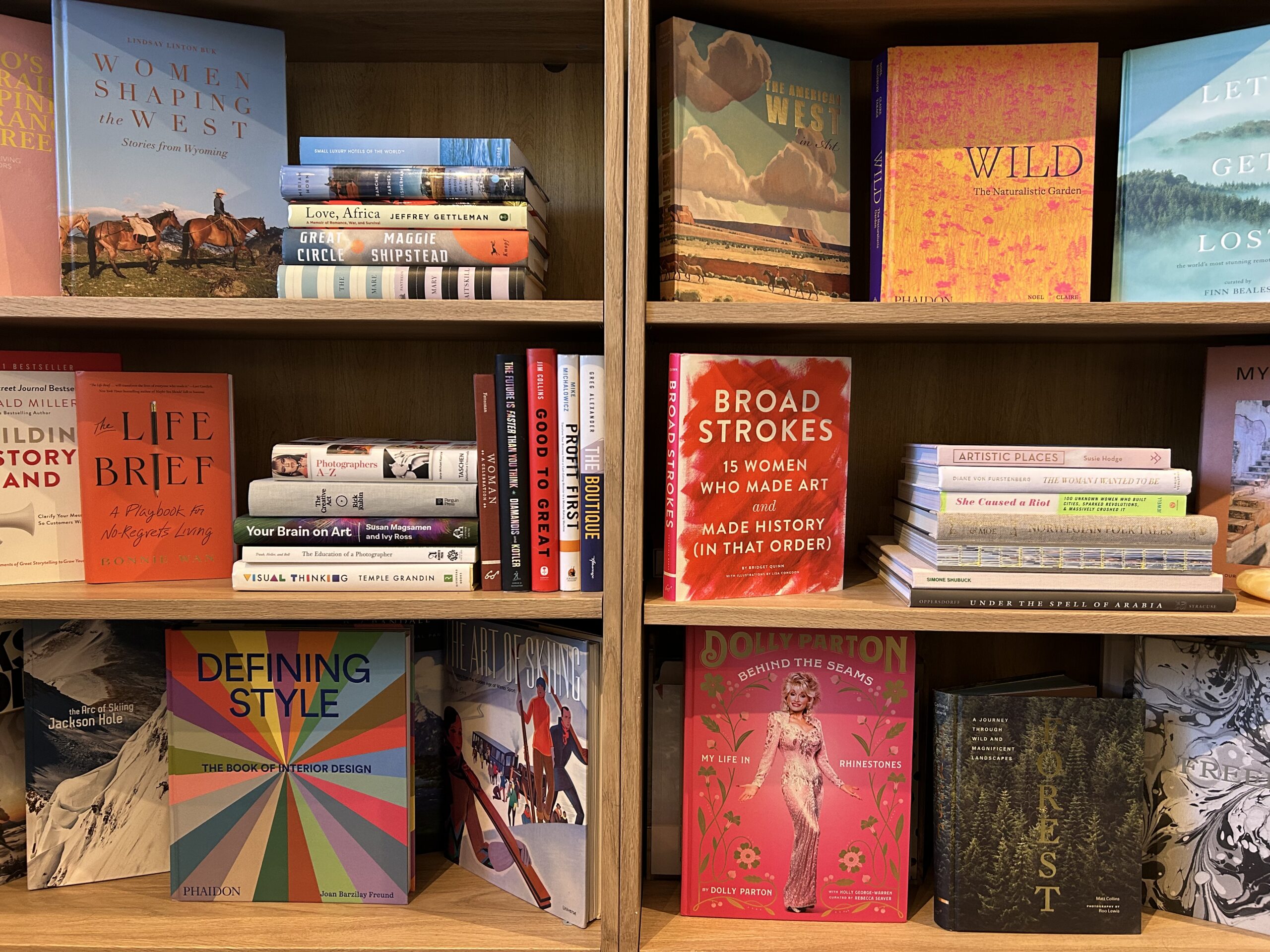
It feels like school starts and suddenly they are everywhere again. Books in backpacks. Books assigned for class. Books opened over homework at the kitchen table. Books negotiated at bedtime. For adults, it’s the book they’re reading past midnight. The book that keeps them current in their field or sends them deeper into a subject they already know well. Or it’s the book they bought on summer vacation staring at them from their nightstand. Or this week, perhaps it’s not a book, but reading about books in the highly anticipated New York Times Book Review’s fall preview.
This much we know: there are books we read because someone tells us to and books we read because no one can stop us. The best education makes room for both.
Which brings us back to school, where learning to read is only the beginning. First, we learn how to do it. Letters become words, words become sentences, and eventually we stop thinking about the mechanics altogether. But learning to read and becoming a reader occupy separate worlds. Becoming a reader happens when the reading zips past what’s assigned, or when we discover an author and immediately want everything they’ve written. (At Ouest House, we’re admittedly guilty on both counts!)
There is no question that there is alchemy in reading. A thought in someone’s mind becomes words on a page; those words become images in our minds, and suddenly an entirely new world appears in our own. Pure magic! A book lets us jump the fence and spend time outside our own boundaries. We encounter unfamiliar lives, contested histories, distant places, impossible creatures, ancient myths, and complicated questions and ideas we might never have known had we not picked up a book.
And somewhere in all that magic, our imaginations become more empathetic and collaborative, alive to other perspectives and aware of how much there is to know outside the limits of our own experiences and boundaries!
Cut to, that feels timely this September with the Jackson Hole Book Festival returning on Saturday, September 26, with 25 nationally acclaimed authors for a free day of conversations at Trailborn Jackson Hole at Snow King. Its ambitions sound a lot like the ambitions of a good school: connection, creativity, conversation, and a celebration of all things literary. The Festival describes those four ideas as its core pillars, with the written word becoming a way to find common ground, venture into new territory, exchange ideas, and celebrate the writers who make all of that possible.
And here is where La Liste comes in! This month, ours begins with JHBF. Everything is on our WTR (Want To Read) and TBR (To Be Read) lists.
Here are several we know you’ll want to check out.
Susan Orlean
Joyride
Susan Orlean has made a career of following subjects other writers might bypass and finding the extraordinary stories inside them. She is best known for The Orchid Thief and The Library Book; this fall she’ll talk about Joyride, a memoir about her life as a writer and the everlasting curiosity that has propelled it.
Theo Baker
How To Rule The World: An Education in Power at Stanford University
Theo Baker represents another generation of storytelling. As a 17-year-old freshman reporter at Stanford, his investigative reporting ultimately contributed to the resignation of the university’s president and made him the youngest person to receive a George Polk Award. His first book, How To Rule The World: An Education in Power at Stanford University, takes readers inside a culture of ambition, money, and influence.
Rick McIntyre
Yellowstone Wolves
Rick McIntyre has spent decades watching wolves, including more than 25 years observing them in Yellowstone. His acclaimed Yellowstone Wolves series introduced readers to individual animals, packs, and their complex society. In My Life with Wolves, he’ll discuss his own story alongside theirs.
Evan Osnos
The Haves and Have-Yachts
Evan Osnos won the National Book Award for Age of Ambition, his portrait of contemporary China at a moment of enormous transformation. His Festival book, The Haves and Have-Yachts, turns his eye toward extreme wealth and what it says about American life.
Alexandra Fuller
Fi: A Memoir of My Son
Alexandra Fuller is well-known for Don’t Let’s Go to the Dogs Tonight, the memoir of her childhood in Rhodesia that established her unforgettable voice. Her newest, Fi: A Memoir of My Son, is about the death of her 21-year-old son and the impossible task of finding language for grief.
Liaquat Ahamed
1873: The Rothschilds, First Great Depression, and the Making of the Modern World
Liaquat Ahamed won the Pulitzer Prize for Lords of Finance, which made the financial forces behind the Great Depression read with the propulsion of a novel. His new book, 1873: The Rothschilds, the First Great Depression, and the Making of the Modern World, travels further back to the first truly global economic crisis and the people and decisions at its center.
Craig Johnson
The Brothers McKay
Wyoming’s own Craig Johnson, whose Walt Longmire mysteries have given readers more than two decades of crimes, characters, and Wyoming country, is speaking about his latest, The Brothers McKay, his 22nd novel and reason to return.
More authors and their books include:
Nicholas Boggs – Baldwin: A Love Story
Annie Chen – Salmon Run
Barbara Demick – Daughters of the Bamboo Grove
Edward Fishman – Chokepoints: American Power in the Age of Economic Warfare
Beverly Gage – This Land is Your Land
Garrett M. Graff – The Devil Reached Toward the Sky: An Oral History of The Making and Unleashing of the Atomic Bomb
Paul Andrew Hutton – The Undiscovered Country: Triumph, Tragedy, and the Shaping of the American West
Tom Lin – Babylon, South Dakota
Ray D. Madoff – The Second Estate: How the Tax Code Made an American Aristocracy
Nina McConigley – How to Commit Postcolonial Murder
Robert Moor – In Trees: An Exploration
Ben Rhodes – All We Say: The Battle for American Identity
Eugene Robinson – Freedom Lost, Freedom Won: A Personal History of America
Lois Romano – An Inconvenient Widow: The Torment, Trial, and Triumph of Mary Todd Lincoln
Patmeena Sabit – Good People
David E. Sanger – New Cold Wars: China’s Rise, Russia’s Invasion, and America’s Struggle to Defend the West
Simone Stolzoff – How to Not Know: The Value of Uncertainty in a World that Demands Answers
Stephen Witt – The Thinking Machine: Jensen Huang, Nvidia, and the World’s Most Coveted Microchip
We love giving ourselves books to read, discuss, swap and share, then adding the favorites to our House library, or donating them to our beloved local library. Let us know when and where we can find you at the Book Festival. We’ll be there to talk books, buy a few, and meet the people who wrote them. One suggestion before you go: make room on your nightstand and everyone else’s for another stack.
Visit jacksonholebookfestival.org to see the authors, schedule, and ways to donate and volunteer.
Finally, remember Old Bill’s Fun Run is the giving season. The best gift? Learning to read and becoming a reader. The Education Foundation Jackson Hole and Jackson Hole Book Festival are great places to give the gift of reading, books, and inspiration. And, when your book becomes a great film, a film festival may be where you see it first! JHIFF audiences saw American Fiction, adapted from Percival Everett’s Erasure, before it went on to win the Academy Award for Best Adapted Screenplay.